
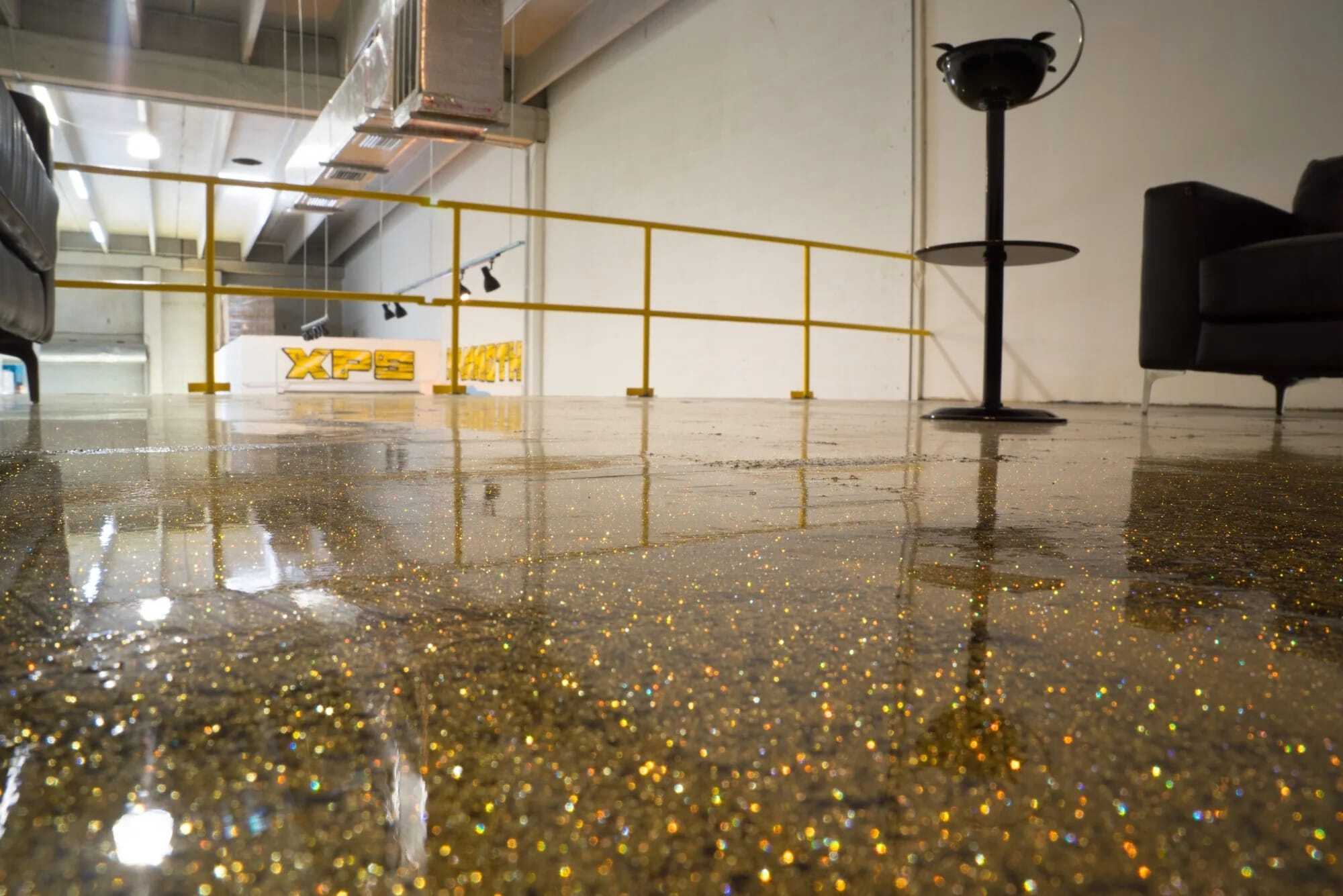
Why Understanding Epoxy Floor Cost Matters
If you’re planning to enhance your garage, basement, or commercial space with epoxy, you’re likely asking the big question: “How much does epoxy flooring cost?” It’s a valid concern. Budget is a factor in every renovation, and epoxy flooring is no exception.
But here’s the truth: while epoxy might seem pricey upfront, it saves you time, hassle, and future repairs. It’s a long-term investment that delivers value across decades.
Let’s break down exactly where your money goes.
The Average Epoxy Floor Cost in Detroit
Nationally, epoxy floor installation costs range from $3 to $12 per square foot, depending on the size of the area, the type of epoxy used, and the surface condition. In Detroit, you can expect to pay on average between $2,000 and $3,500 for a standard residential epoxy flooring garage.
For a typical two-car epoxy floor garage, the average cost to epoxy is around $2,400 to $3,200. This estimate includes labor, materials, preparation, and topcoat finishes.
What Affects the Price?
Epoxy floor cost is influenced by several key variables:
1. Size of the Space
Larger spaces cost more overall but often less per square foot due to economies of scale.
2. Condition of Existing Concrete
Damaged or uneven concrete will require patching, grinding, or leveling, which adds to cost.
3. Epoxy Type
From solid-color systems to metallic epoxy coatings or epoxy paint for concrete, material selection makes a big difference.
4. Customization
Want color flakes, metallic sheens, or custom epoxy floor colors? These elevate your aesthetic – and your price.
5. Topcoats and Sealants
Durable top layers improve resistance to UV, chemicals, and wear, and may add $1–2/sq ft.
6. Labor Costs
Hiring professionals ensures a lasting finish but naturally increases overall spend.
Why It’s More Than Just a Coating
Epoxy isn’t just paint. It’s a full resurfacing system that involves:
- Mechanical surface prep
- Crack and joint repair
- Multiple layers of coating
- Optional textures or flakes
- Protective topcoat application
Epoxy is durable durability. It’s strong simplicity. It’s the most vibrant form of functional flooring.
When done right, epoxy resists staining, cracking, moisture, tire marks, and chemical damage. It transforms your epoxy flooring garage or workspace into a safer, cleaner, more attractive area.
Comparing Epoxy to Other Floor Options
Let’s compare cost and durability:
| Flooring Type | Cost per Sq Ft | Lifespan | Maintenance |
| Epoxy Floor Coating | $3–$12 | 10–20 years | Minimal |
| Concrete Sealer | $1–$3 | 2–5 years | Requires resealing |
| Tile | $7–$15 | 15–25 years | Moderate to high |
| Vinyl | $2–$7 | 10–15 years | Moderate |
Answering the Big Question:
How Much Does It Cost to Epoxy a 2-Car Garage?
Here’s a detailed breakdown for a standard 2-car garage (400–500 sq ft):
| Item | Estimated Cost Range |
| Surface Preparation | $300–500 |
| Epoxy Materials | $800–1,200 |
| Labor | $1,000–1,500 |
| Optional Customization | $100–500 |
| Total | $2,200–3,700 |
This investment means no more chipping concrete, no more oil stains, and no more slippery surfaces.
A Word on Floor Coating vs. Epoxy Systems
You might be tempted by low-cost “floor coating” kits from big-box stores. These typically use thin epoxy paint for concrete, which peels, fades, and wears down fast.
Professional epoxy flooring involves multi-layer systems, high-grade materials, and industrial equipment. It lasts 5–10x longer and maintains its beauty and function for decades.
Customize with Epoxy Floor Colors
One of the best aspects of epoxy is the variety of epoxy floor colors available. Whether you want a subtle neutral for your garage or a bold flake system in your showroom, there are endless combinations.
Popular choices include:
- Gray and Slate – industrial and clean
- Tan and Beige – warm and welcoming
- Black with Metallic Flecks – sleek and modern
- Custom Flake Blends – for texture and traction
Color isn’t just visual – it impacts safety, light reflection, and mood in the space.
Epoxy Paint for Concrete: Is It Enough?
Epoxy paint is a cost-effective way to refresh concrete but lacks the durability of full systems. It works best for low-traffic residential spaces and DIY touch-ups. If you’re coating a garage or commercial space, true epoxy systems provide exponentially better performance.
Why Epoxy Is the Smart Choice in Detroit
With Michigan’s cold winters and humid summers, concrete expands and contracts, leading to cracks and dust. Epoxy flooring helps seal out moisture, reduce dust, and enhance safety year-round.
Plus, the reflective surface improves lighting in dark garages and workshops.
Additional Cost Considerations for Businesses
For commercial clients, epoxy flooring costs can vary based on:
-
Load-bearing requirements: Heavy equipment needs thicker coatings.
-
Chemical exposure: Labs or auto shops require chemical-resistant topcoats.
-
Foot traffic: Retail and education spaces need abrasion-resistant finishes.
-
Branding and aesthetics: Custom colors or logos increase complexity and price.
Still, when comparing epoxy to tile or polished concrete in commercial environments, epoxy offers a better ROI due to reduced maintenance, faster installation, and longevity.
Real-World Applications and ROI
Detroit homeowners and business owners are already making the switch to epoxy floors. Here’s why:
- Auto shop in Corktown saved $1,200/year in maintenance by switching to epoxy.
- A restaurant in Midtown saw a 35% increase in staff safety from slip-resistant coatings.
- Homeowners in Grosse Pointe increased home resale value by 2.5% after installing a garage epoxy floor.
These numbers reflect what we hear every day: epoxy pays off.
Long-Term Value of Epoxy Floors
Beyond upfront cost, epoxy offers:
-
Energy savings: Reflective surfaces reduce lighting needs
-
Cleaner air: No dust from concrete or allergens trapped in seams
-
Fewer repairs: Cracks, stains, and mold are virtually eliminated
-
Stronger branding: For commercial spaces, custom finishes support your image
Many of our clients report that after 5 years, their epoxy floors still look new. That’s peace of mind.
Ready to Upgrade? Here’s the Path Forward
We make the process easy:
-
Free Consultation: We assess your space and give a transparent quote.
-
Prep & Install: Our team handles all grinding, cleaning, and layering.
-
Curing & Walkthrough: You’ll be back on your floors in 24–72 hours.
We’ve worked with hundreds of homeowners and businesses in Detroit. Our results speak for themselves.
Don’t let cost confuse you – let it guide you to quality. Epoxy may not be the cheapest up front, but it’s the most cost-effective in the long run.
Epoxy Flooring Detroit – Get Your Free Estimate Today!
FAQs
How expensive is it to epoxy a floor?
Epoxy flooring typically costs between $3 and $12 per square foot. Basic solid-color epoxy is on the lower end, while high-build systems like metallic epoxy or flake epoxy floors fall on the higher end due to additional layers and decorative finishes. Costs also vary based on surface preparation, square footage, and labor rates in your region.
How much is epoxy flooring in the U.S.?
You can expect to pay between $3 and $12 per square foot for professionally installed epoxy flooring. Garage floors and commercial spaces with simple coatings may cost $3 to $5 per square foot, while decorative options with metallic finishes or custom flake blends can cost $8 to $12 or more per square foot.
Is epoxy floor cheaper than tile?
Yes, epoxy flooring is often more cost-effective than tile. While ceramic or porcelain tile installation typically ranges from $10 to $20 per square foot (including labor and materials), epoxy can cost significantly less for a seamless, durable finish. Epoxy also requires less ongoing maintenance, making it a smart long-term investment.
How much is epoxy flooring per square foot?
The cost of epoxy flooring ranges from $3 to $12 per square foot. Factors like floor size, existing condition, type of epoxy (solid-color, flake, metallic), and whether anti-slip additives or multiple coats are used can influence pricing. Larger spaces tend to get better per-square-foot rates due to economies of scale.
Is epoxy flooring slippery?
Epoxy flooring can be slippery when wet, especially if a high-gloss finish is used. However, professional installers can mix in anti-slip additives like aluminum oxide, silica sand, or vinyl flakes to create a textured, non-slip surface. This is especially important in garages, kitchens, bathrooms, or commercial spaces where spills are more likely.