
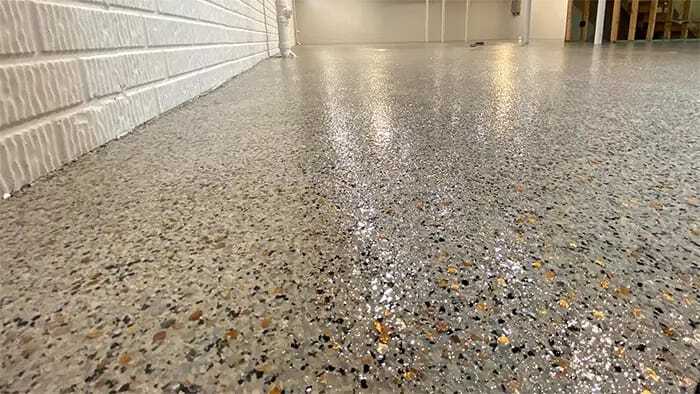
A Surface That Works Harder and Looks Better
Gone are the days when floors were just underfoot. In today’s homes, warehouses, and commercial buildings, your floor is a reflection of design sensibility and durability. That’s where epoxy coating comes in. It doesn’t just cover concrete – it transforms it.
Strong but sleek. Industrial but beautiful. Practical but show-stopping. That’s the antithesis of what most flooring offers – and the very definition of epoxy coating.
What Is Epoxy Coating?
At its core, epoxy coating is the result of mixing a resin with a hardener to create a chemical bond that’s hard, glossy, and seamless. Applied to concrete, it forms a protective layer that enhances performance and appearance.
Unlike basic sealants or paints, epoxy coatings create a surface that is:
- Chemical- and water-resistant
- Slip-resistant with additives
- Exceptionally durable
- Customizable in color and texture
- Reflective, increasing brightness up to 300%
Epoxy is not a one-size-fits-all solution. There are different types designed for residential garages, industrial facilities, commercial kitchens, and more. And yes, each serves a purpose.
Key Areas Where Epoxy Coating Shines
1. Epoxy Concrete Floor for Residential Use
If you’re tired of oil stains, cracks, and tire marks in your garage, an epoxy concrete floor can change everything. Besides a clean, modern look, it offers:
- Easy cleaning with no need for harsh chemicals
- Moisture resistance – perfect for basements and garages
- UV protection to prevent fading
2. Commercial and Industrial Applications
For spaces that handle high traffic, chemical spills, or heavy equipment, epoxy coatings bring industrial strength with minimal maintenance. Think:
- Warehouses
- Showrooms
- Healthcare facilities
- Retail environments
Epoxy can handle weight, temperature swings, and impact – all while looking polished and professional.
3. Resin Flooring in Specialized Environments
In labs, food processing plants, or hospitals, resin flooring offers a hygienic and non-porous surface. It supports compliance with health and safety regulations, thanks to:
- Anti-microbial additives
- Seamless, crack-free finishes
- Low VOC options for clean air quality
The Cost to Epoxy Garage Floor: Worth Every Penny
If you’re wondering about the cost to epoxy garage floor, here’s the range: $2 to $12 per square foot, depending on prep work, type of epoxy, and customizations like flakes or metallics.
The average homeowner spends around $2,512 for a complete epoxy garage installation. That might sound like an investment – and it is. But one that pays off in:
- Longevity (10–20 years of performance)
- Reduced maintenance costs
- Improved property value
Compare that to replacing cracked concrete or stained tile every few years, and epoxy wins the long game.
The Benefits Backed by Data
Here are the facts that solidify epoxy as the go-to flooring solution:
- The epoxy coating market is set to reach $3.72 billion by 2031, growing at a CAGR of 5.50%
- Epoxy garage floors can handle vehicle weight, fluid leaks, and constant traffic
- Concrete floor epoxy resists moisture, stains, and cracking better than untreated concrete
- Resin flooring is dominating healthcare and cleanroom settings due to its hygiene properties
Epoxy isn’t just a surface – it’s a strategic upgrade for both form and function.
Why Choose Us for Your Epoxy Garage Installation?
With hundreds of successful installations across residential and commercial settings, we bring:
- Precision surface prep (grinding, leveling, patching)
- Multiple coating layers customized to your needs
- Options for slip-resistance, decorative flakes, and metallic finishes
- Fast, professional service with clear timelines
Our team ensures that from consultation to completion, your epoxy garage or workspace looks and performs like it should.
The Epoxy Installation Process: What to Expect
Understanding how epoxy flooring is installed can help you prepare and set expectations. Here’s how the process typically unfolds:
-
Assessment and Planning: We inspect your existing concrete for cracks, moisture issues, or uneven areas.
-
Surface Preparation: This step involves cleaning, degreasing, and often mechanical grinding to ensure a solid bond.
-
Crack and Joint Repair: We fill and smooth out any imperfections to create a level base.
-
Primer Application: A primer is applied to enhance adhesion and seal the substrate.
-
Epoxy Application: This includes one or more layers of epoxy resin, depending on the intended use and finish.
-
Optional Decorative Finish: Metallic, flake, or quartz finishes can be added at this stage.
-
Topcoat and Seal: A final topcoat adds durability and UV protection while locking in texture.
-
Curing: The floor needs 24 to 72 hours to fully cure, depending on temperature and humidity.
Epoxy Garage Floors vs. Other Options
Let’s compare epoxy to other popular flooring choices:
Epoxy vs. Paint: Paint peels. Epoxy doesn’t. It lasts up to 10x longer with better resistance.
Epoxy vs. Tiles: Tiles can crack and trap dirt. Epoxy is seamless, hygienic, and low-maintenance.
Epoxy vs. Polished Concrete: While both are durable, epoxy offers better chemical resistance and design flexibility.
For anyone who values long-term savings, cleanliness, and visual appeal, epoxy garage floors are a smarter choice.
Advanced Epoxy Technologies Worth Considering
Modern epoxy systems are more advanced than ever:
- Antibacterial epoxy for hospitals and kitchens
- Anti-static epoxy for sensitive electronic facilities
- Thermal-resistant epoxy that withstands high temperatures in industrial settings
- Eco-friendly, low VOC coatings for healthier indoor air
These innovations make concrete floor epoxy not only versatile but future-ready.
Common Questions Answered
What is epoxy coating for?
Epoxy coating is used to create a durable, chemical-resistant, and attractive surface on concrete floors. It’s commonly applied in garages, warehouses, showrooms, basements, and industrial facilities to protect the concrete from wear, moisture, oil, and chemicals. Epoxy also enhances the floor’s appearance with finishes ranging from solid colors to decorative flakes and metallic effects.
What is the disadvantage of epoxy coating?
Epoxy coatings, while strong, do come with some drawbacks:
- Surface prep is critical – Poor prep can lead to peeling or bubbling.
- Slippery when wet – Especially with high-gloss finishes (though anti-slip additives can help).
- Long curing time – May take several days before it’s ready for full use.
- Difficult to remove – Once cured, epoxy is nearly permanent.
- UV sensitivity – Without a UV-resistant topcoat, epoxy may yellow or fade in sunlight.
When should you not use epoxy?
Avoid using epoxy when:
- The concrete is damp or moisture-prone, as this can prevent proper bonding.
- Temperatures are too low or too high during installation, which can affect curing.
- The surface is not properly prepared—dirty, oily, or dusty concrete won’t allow epoxy to adhere.
- You’re seeking a temporary finish—epoxy is long-lasting and not ideal for short-term applications.
How long does epoxy coating take to dry?
Epoxy coatings typically take 12 to 24 hours to dry to the touch, but they need 72 hours or more to fully cure for heavy traffic or vehicle use. Temperature and humidity affect dry times—cool, damp conditions can slow down the curing process. Always follow the product’s specific instructions.
How many coats of epoxy do you need?
Most epoxy floors require at least two coats:
- A base coat – for adhesion and color.
- A topcoat – for protection and finish (matte, satin, or gloss).
For decorative finishes like flake or metallic epoxy, an additional layer may be added between the base and top coats. High-performance floors may even use a primer, base coat, broadcast layer, and clear topcoat for maximum durability.
Your space deserves a floor that’s as tough as your standards and as sleek as your taste. Whether you’re a homeowner wanting to upgrade your epoxy garage or a business looking for resin flooring that complies with strict hygiene standards, epoxy coating offers unbeatable performance.
From garages to galleries, kitchens to clinics – this coating isn’t just paint. It’s protection. Is performance. It’s polish.
Epoxy Flooring Detroit – Get Your Free Estimate Today!